
Explained
Explained
How remarketing works.
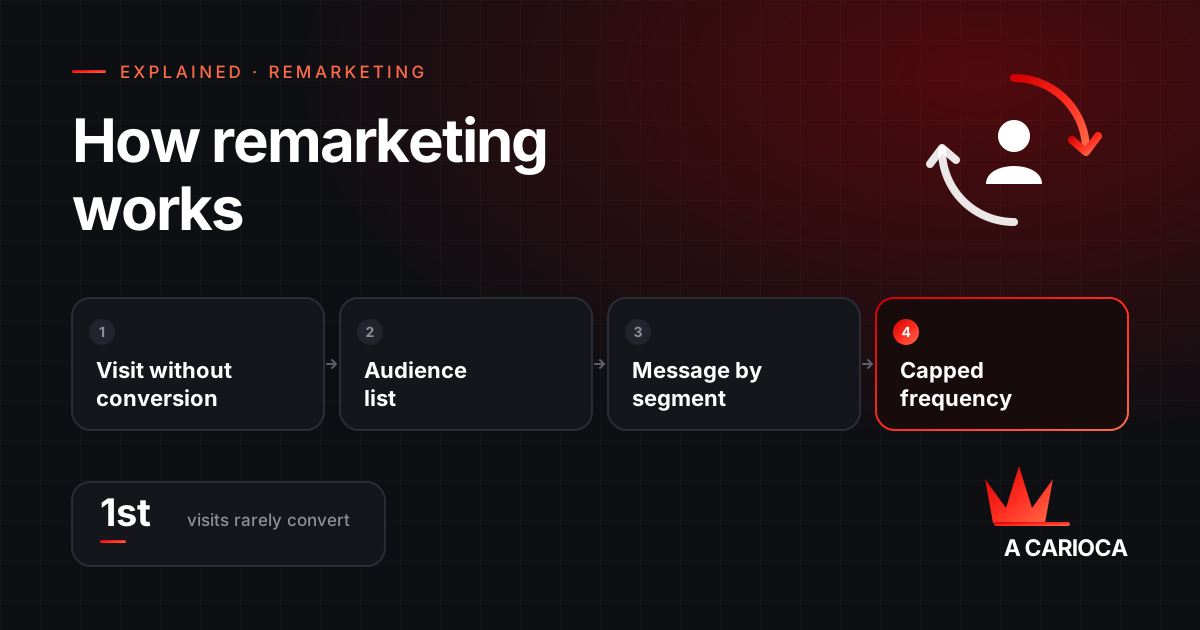
Remarketing shows ads to people who already visited your site. When someone lands on your page, a tag adds them to an audience list, and campaigns can then target that list across Google, YouTube, Facebook and Instagram. Because the audience already knows you, cost per conversion is typically a fraction of cold traffic.
How the tracking actually works.
A small piece of code on your site adds visitors to a list held by the ad platform. Campaigns then target that list rather than an audience defined by interests. The platform never tells you who the individuals are; you are targeting a group.
Cookie restrictions have made this less reliable than it used to be, particularly on Apple devices. Server-side tracking recovers part of it. Anyone telling you the restrictions changed nothing is not measuring carefully.
Segmentation is what makes it work.
One list containing everyone who visited any page is the version that annoys people and produces little. Someone who abandoned a cart, someone who read your pricing page and someone who bounced off a blog article need three different messages.
The cart abandoner needs a reason to finish. The pricing page reader needs an objection answered. The blog reader probably needs nothing yet. Treating them identically wastes the advantage the channel has. See remarketing management.
The frequency mistake.
Past a certain number of impressions, additional views stop producing sales and start producing irritation. That cost never appears in the campaign report, because resentment is not a metric the platform records.
Setting a frequency cap and excluding people who already converted are two settings that take five minutes and prevent the most common complaint about the entire channel.
When remarketing cannot help.
It amplifies traffic; it does not create it. A site with fifty visitors a month cannot build a list large enough to deliver, and the campaign will barely spend. In that situation the honest recommendation is SEO or paid traffic first.
It also cannot fix a bad offer. If people leave because the price is wrong or the page does not answer their question, following them around the internet with the same message will not change their mind.