
01 · Content SEO
Content SEO
Volume tells you how many. Intent tells you whether they buy.
A page targeting a high-volume term with the wrong intent brings traffic that never converts.
Content SEO is the work of deciding which pages should exist and what each must answer, based on what people actually type and why. It covers intent research, page structure, internal linking and the editorial standard that makes a page worth citing. It depends on technical SEO having cleared the way first.
What is included
What is included
- Intent research
- Page mapping
- Internal linking
02 · Detail
Intent decides everything.
The same words can carry completely different intent. Someone searching for a definition wants an explanation; someone searching for a supplier wants a phone number. Building a sales page for the first group, or an article for the second, fails in both directions regardless of how well it is written.
Depth beats frequency. One page that answers a question completely will consistently outrank three shallow pages circling it, and it is far more likely to be cited by an AI assistant. Publishing weekly to hit a quota produces volume, not authority.
Internal linking is the part most often skipped. A well-written page with no links pointing to it from within your own site is telling Google that even you do not consider it important.
03 · How it works
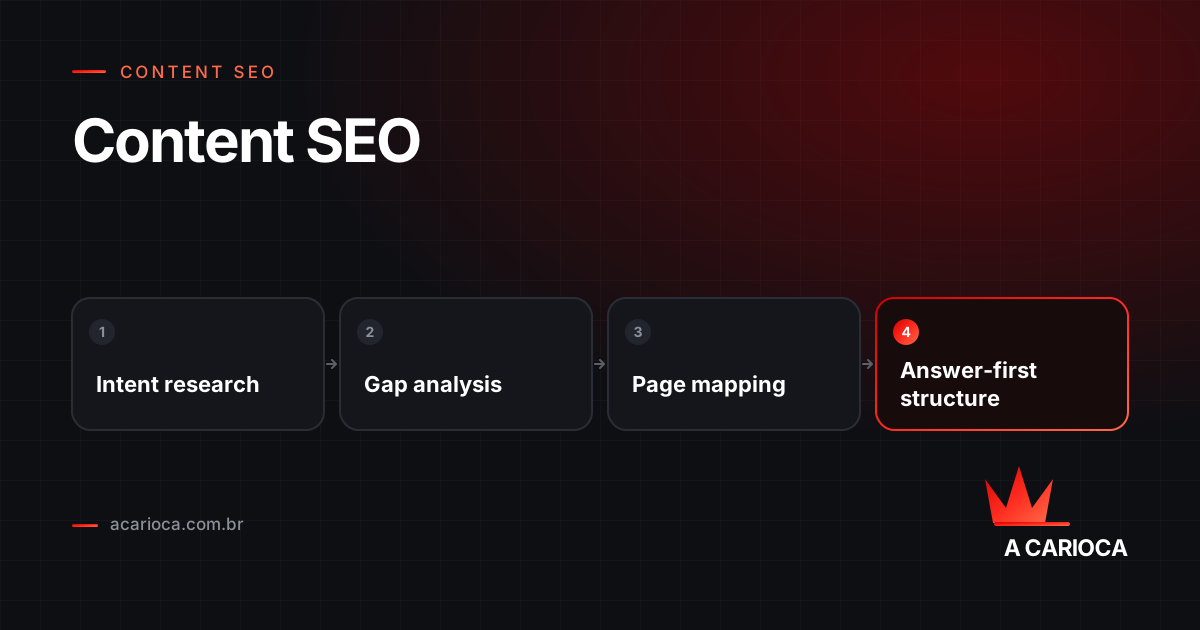
How we build a content plan.
- 01
Intent research
What people type, and what they expect to find when they type it.
- 02
Gap analysis
Which questions your site does not answer that buyers reliably ask.
- 03
Page mapping
One page per intent. Two pages targeting the same intent compete with each other.
- 04
Answer-first structure
The complete answer near the top, detail below.
- 05
Internal linking
New pages connected to existing ones so authority actually flows.
04 · Fit
Who content SEO is for.
It fits companies whose buyers research before contacting: B2B, professional services, healthcare, education, considered purchases of any kind. If your customers ask questions before choosing, the pages that answer those questions are where the next customer comes from.
It fits sites with technical health already sorted and a way to publish, whether an internal writer, a subject expert who can be interviewed, or us producing from your expertise. It fits businesses that want to be cited by AI assistants, because the same structure that ranks is the structure that gets quoted.
It is a poor fit for sites with indexing problems, which need technical work first, and for businesses that want volume for its own sake. Publishing weekly to hit a quota produces pages, not authority.
05 · Common mistakes
The mistakes we correct first.
- Volume over intent. A page targeting a big term with the wrong intent brings traffic that never converts.
- Thin pages circling a topic. One complete answer outranks three shallow ones and is far more likely to be cited.
- Cannibalisation. Several pages competing for the same query. They are merged or differentiated.
- No internal links. A good page nobody links to from within the site is telling Google it does not matter.
- Generic AI drafts published as-is. No specific experience, no verifiable claims, nothing only your company could say. They do not rank and do not get cited.
Updating pages that already rank on page two is often the highest-return work available, and it is where we usually start.
06 · Measurement
How we measure and report.
Organic traffic and conversions by page, the queries each page wins, and the position movement of the terms mapped to it. New pages are reported against the intent they were built for, not against total traffic.
A content map is maintained as a living document: topic, intent, page, status and last review, so the plan is visible and nobody publishes a page that competes with an existing one.
07 · Questions
Technical guide
Related services
Next step
Publishing content that gets no traffic?
Send us your site. We will tell you which pages compete with each other and which questions you never answered.
- WhatsApp · +55 24 99929-8231
- Email · atendimento@acarioca.com.br
- Volta Redonda, Brazil · remote worldwide